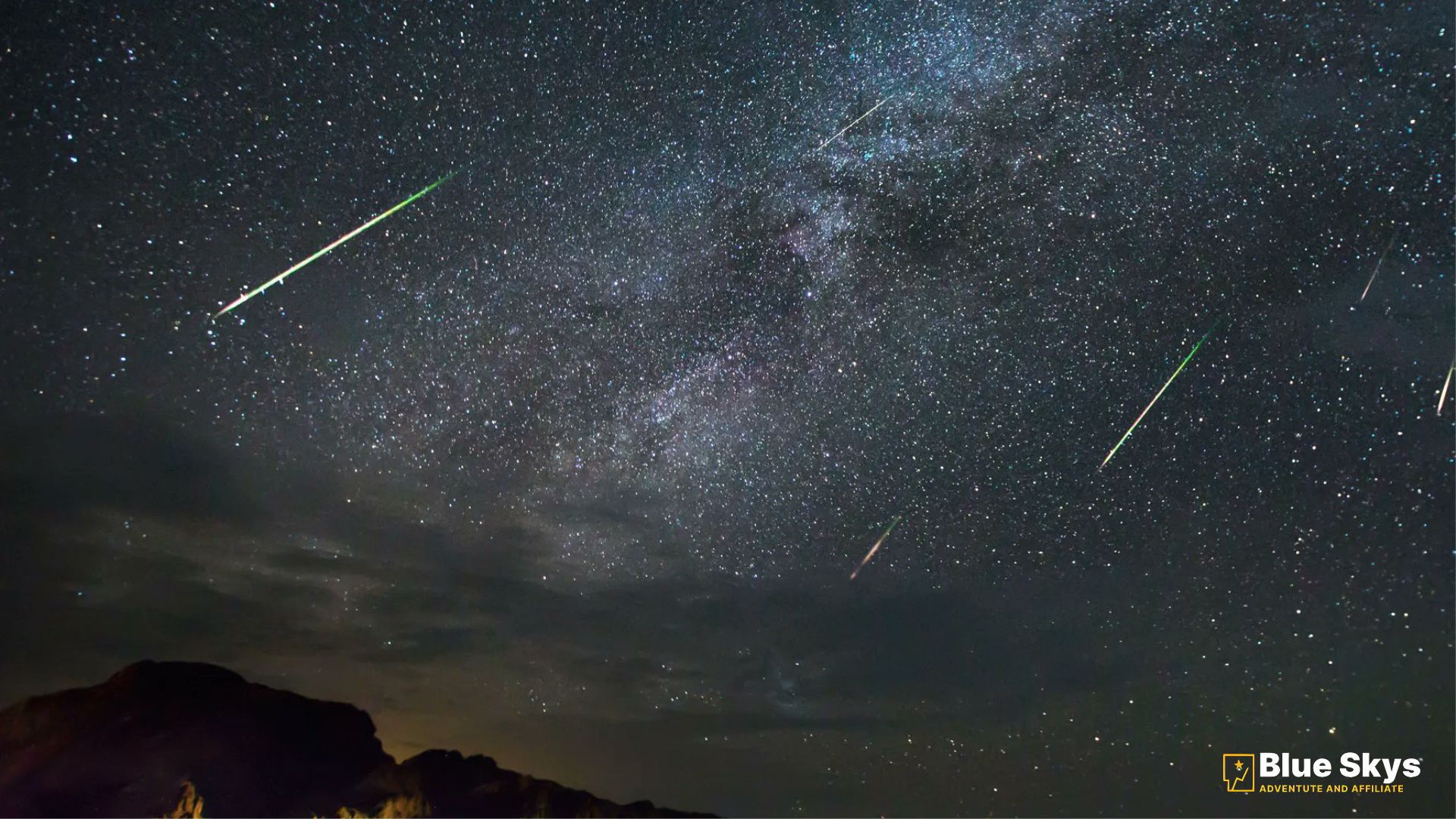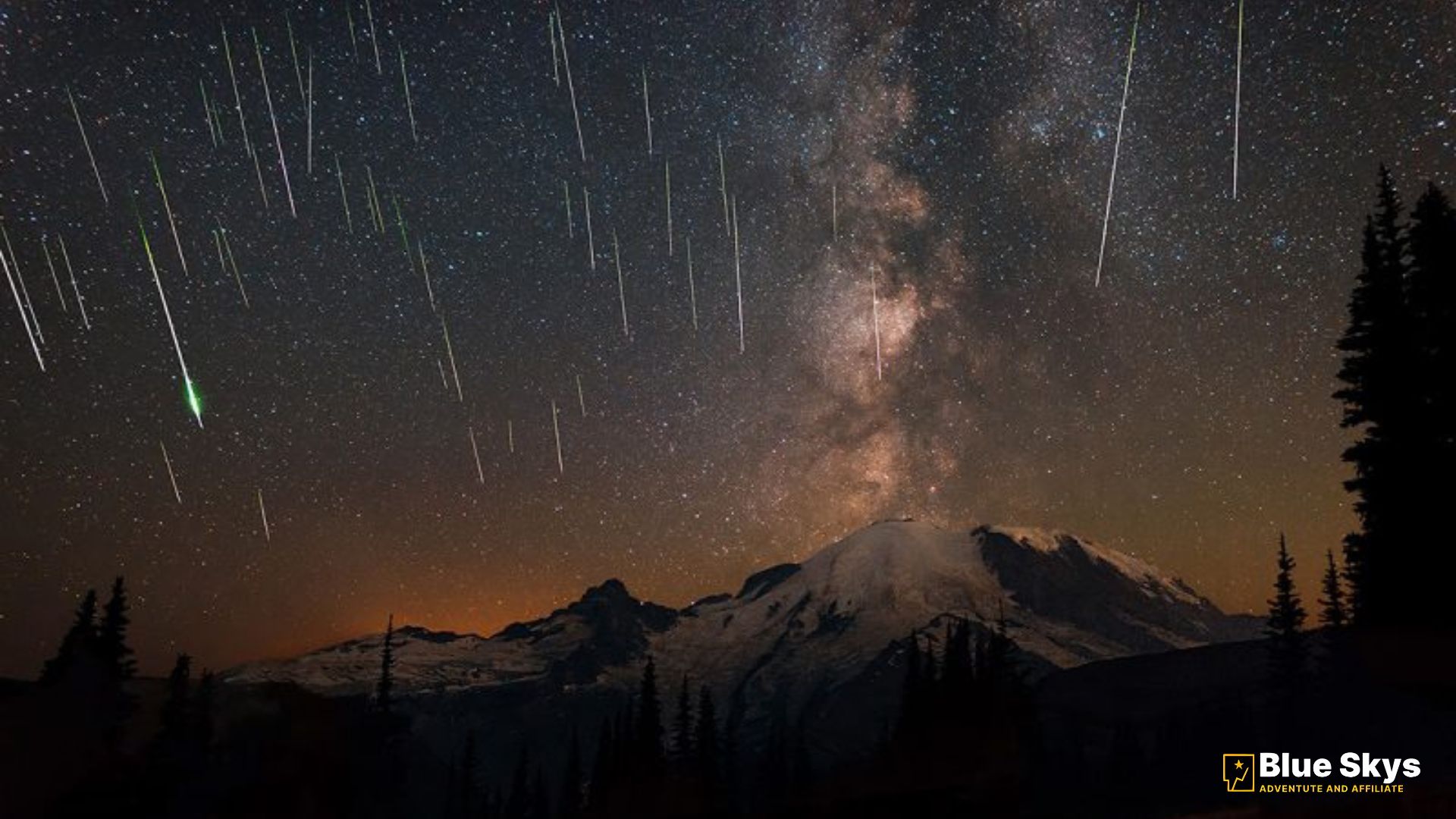
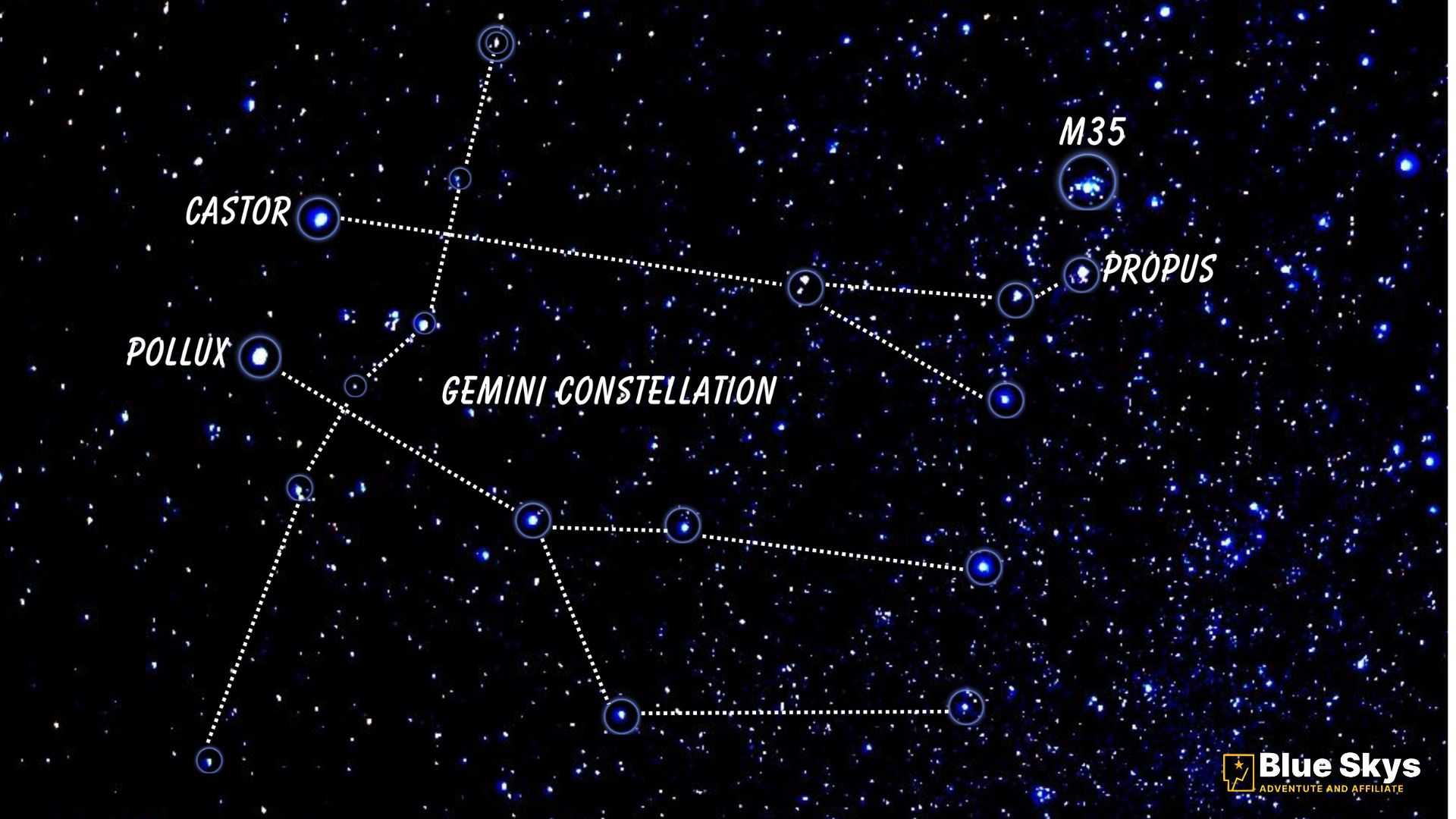
In 2025, the “King of Meteor Showers” is making a massive comeback. Unlike last year’s moon-washed display, the 2025 peak on December 13–14 coincides with a Waning Crescent Moon (only ~30% illuminated). This means dark skies and the perfect stage for the year’s most dazzling performance.
Whether you’re a seasoned stargazer or a curious first-timer, this guide is your roadmap to catching every fireball.
🚀 Geminids 2025: Quick Facts
- Peak Night: Late night Dec 13 into early morning Dec 14
- Best Window: 12:00 AM to 4:00 AM (Your Local Time)
- 2025 Conditions: EXCELLENT. (Dark skies due to low moonlight)
- Look Towards: The constellation Gemini (near stars Castor & Pollux)
- Frequency: A meteor every 30–60 seconds in dark locations!
What Makes the Geminids Special
Unlike most meteor showers that come from icy comets, the Geminids originate from a rocky asteroid. Phaethon’s close approach to the Sun causes its surface to crack and shed dense debris. These rocky fragments produce brighter, slower meteors with longer-lasting trains — making the Geminids one of the most photogenic showers of the year.
Why Do Geminids Come from an Asteroid?
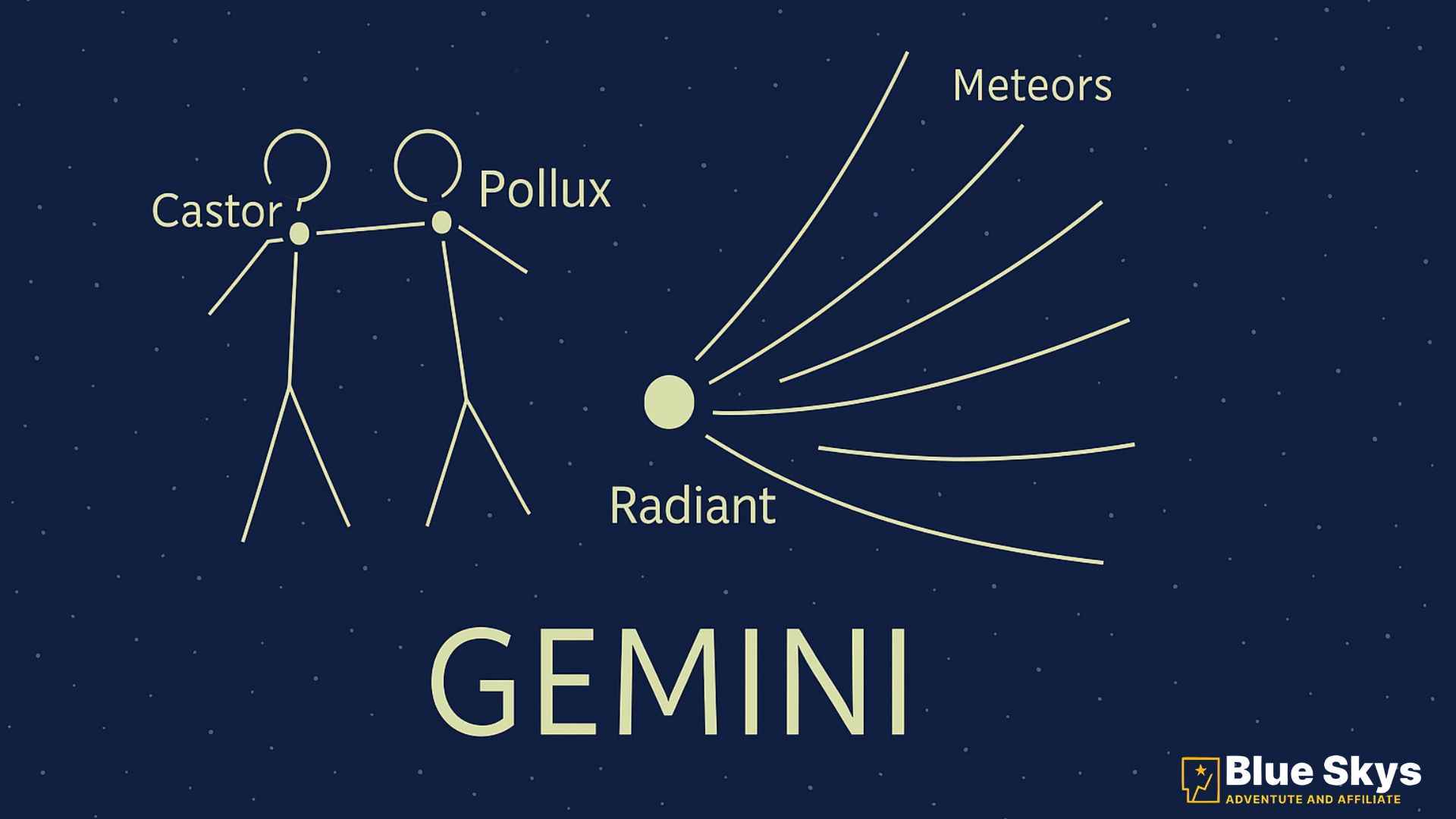
Asteroid 3200 Phaethon experiences extreme heating during its orbit. This leads to thermal fracturing, which breaks off rocky particles. Over time, these fragments form a dense meteoroid stream. Each December, Earth passes through this stream, and the particles burn up in our atmosphere as meteors.
How Many Meteors Can I See Per Hour?
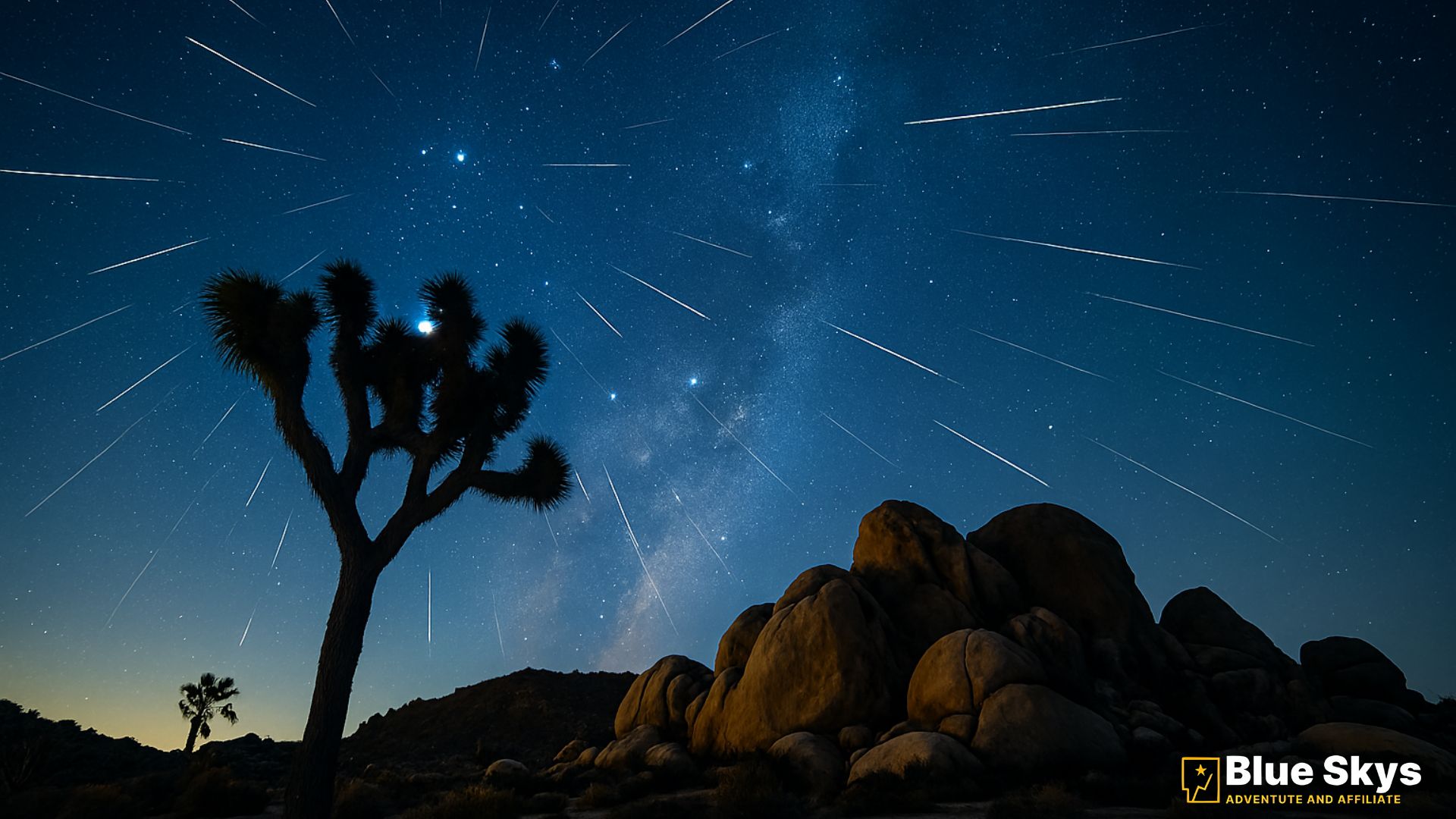
Under dark, moonless skies, you can expect up to 100 meteors per hour at peak. In suburban areas, expect lower counts due to light pollution. The longer you observe — especially after midnight — the more meteors you’re likely to see.
When and Where to Watch
The best time to watch is after midnight on December 13 into the early hours of December 14. Look 30–60 degrees away from the radiant in Gemini for longer meteor trails. A wide, unobstructed view of the sky will maximize your chances.
Best Viewing Locations
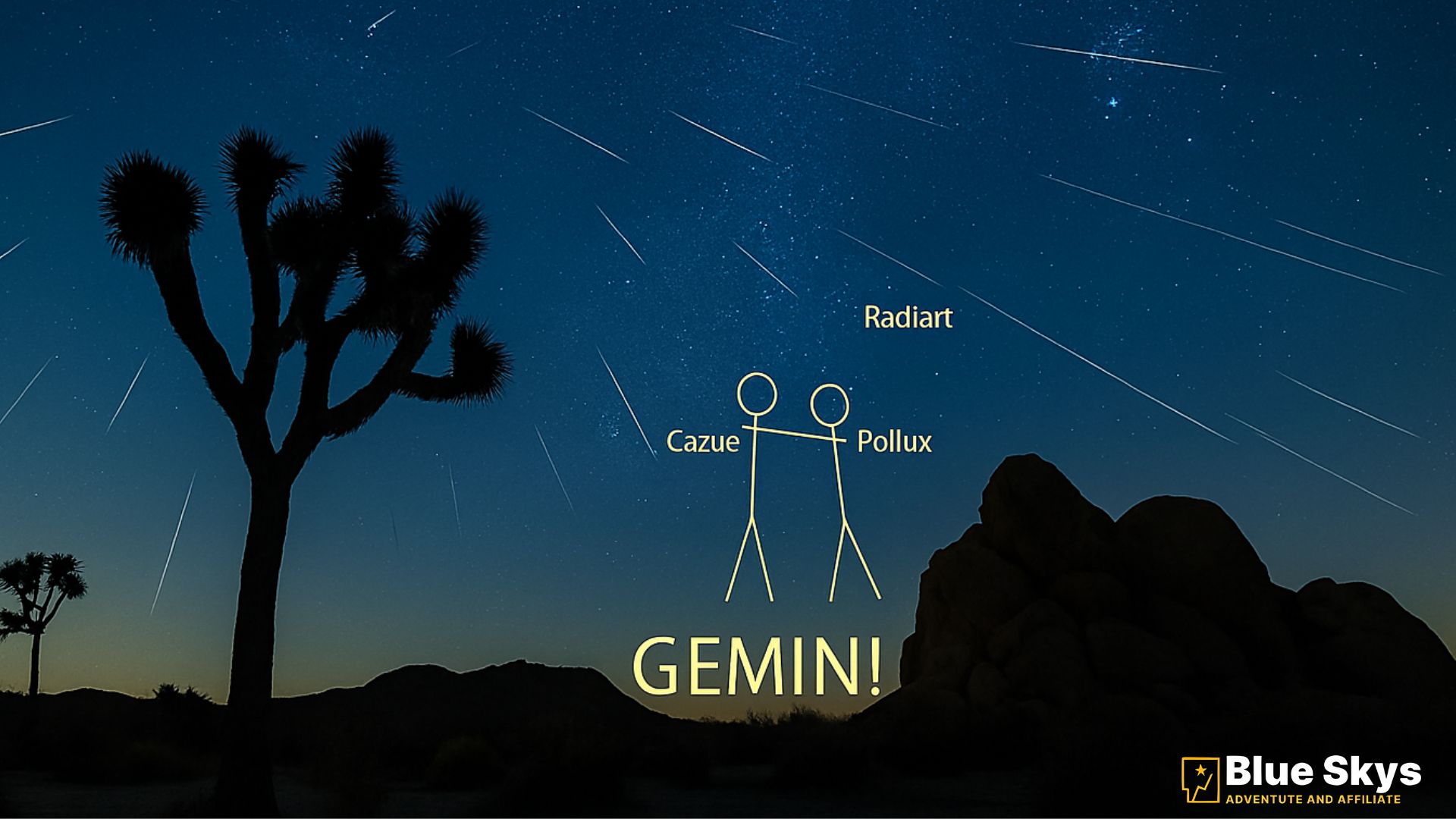
- Joshua Tree National Park, California
- Big Bend National Park, Texas
- Cherry Springs State Park, Pennsylvania
- Galloway Forest Park, Scotland
- Jasper National Park, Alberta
- Uluru Region, Northern Territory, Australia
- Eifel National Park, Germany
To explore further dark sky location visit: Top 10 Dark Sky Destinations for Stargazing Adventures in 2025
How to Prepare for a Long Night
- Check the moon phase and weather forecast 2–7 days before.
- Choose a dark-sky location and confirm access or event times.
- Pack warm layers: thermal base, fleece mid-layer, insulated jacket, snow pants, wool socks, waterproof boots, gloves, hat, and scarf.
- Bring comfort gear: reclining chair, sleeping pad, hand warmers, thermos with hot drinks, and high-energy snacks.
- Prepare your camera: wide-angle lens, tripod, intervalometer, extra batteries (kept warm), and memory cards.
- Arrive 45–60 minutes early to adapt your eyes and set up gear.
- Observe in two blocks: midnight to 2:30 AM, then 3:00 AM to dawn, with a warm break in between.
- Log your observations and pack out all trash before leaving.
Cold-Weather Checklist

- Thermal base layers
- Fleece or wool mid-layer
- Insulated jacket and pants
- Waterproof boots and extra socks
- Hat, gloves, scarf, and face covering
- Hand and foot warmers
- Reclining chair or sleeping pad
- Thermos with hot drinks
- Red headlamp and spare batteries
Photography Tips
Use a DSLR or mirrorless camera with a wide-angle lens (14–35mm). Set aperture to f/2.8–f/4, ISO to 1600–3200, and shutter speed to 15–30 seconds. Focus manually to infinity and shoot in RAW. Point your camera 30–60 degrees away from Gemini for longer meteor trails. Include foreground elements like trees or rocks for dramatic composition.
Related Articles
- 2025 Stargazing Events Calendar
- Stargazing Accessories for Beginners
- How to Photograph Meteor Showers
Final Tip
Set a reminder for December 13–14, pack your gear, and share your best shots using #Geminids2025.